
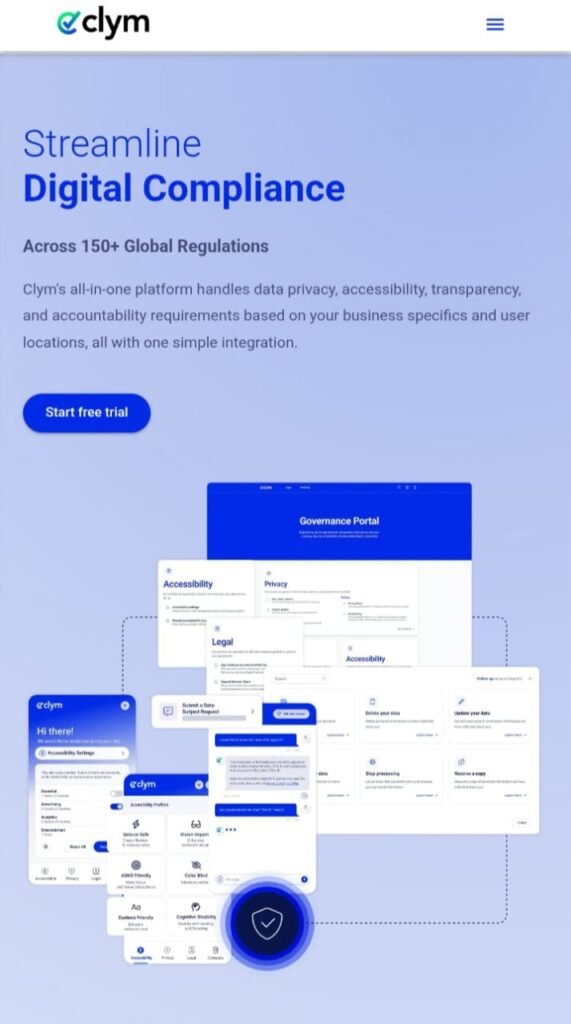
In an era of rapidly evolving digital regulations, businesses face mounting challenges to ensure their online properties remain compliant with global standards. From data privacy laws like the GDPR in Europe and CCPA in California to accessibility requirements like ADA and WCAG, compliance cannot be an afterthought — it’s fundamental to building trust, avoiding legal penalties, and creating an inclusive user experience. Clym.io emerges as a modern solution to this challenge — a unified platform designed to make digital compliance simple, seamless, and scalable for organizations of all sizes.
What Is Clym?
Clym.io is a digital compliance platform that helps businesses manage their data privacy, web accessibility, consent, and governance requirements from a single integrated solution. Rather than relying on multiple vendors and point solutions, Clym consolidates essential compliance functions — such as cookie consent management, data subject request handling, accessibility tools, and governance features — into one platform. This streamlines compliance workflows and reduces operational complexity.
Founded with the mission of simplifying web compliance for all types of organizations — from small businesses to global enterprises — Clym was built to resolve real-world regulatory challenges so businesses can focus on growth rather than legal uncertainty.
Comprehensive Compliance Across the Globe
One of Clym’s core strengths is its extensive coverage of global regulations. The platform supports compliance with 150+ global regulations, including major frameworks such as the GDPR, CCPA/CPRA, LGPD (Brazil), and accessibility standards like WCAG, ADA, and EAA. With pre-configured settings tailored for different jurisdictions, businesses can roll out compliant processes without having to constantly monitor regulatory changes manually.
This broad regulatory coverage is designed to be flexible and responsive. Clym’s system automatically updates compliance behavior as new laws emerge, helping companies adhere to obligations without significant overhead. The global focus ensures that regardless of where users originate, their data rights and accessibility needs are respected — a necessary capability for internationally operating businesses.
Key Features of the Clym Platform
Clym’s product suite is robust, addressing multiple aspects of digital compliance in a unified dashboard. Here’s a breakdown of the most important features:
1. Consent Management
At the heart of digital privacy compliance is consent management. Clym provides a dynamic Consent Management Platform (CMP) that intelligently adapts to regulatory requirements in users’ locations. This means that instead of a one-size-fits-all cookie banner, visitors are presented with consent experiences that meet local legal standards.
Clym’s CMP supports multiple frameworks, including industry standards like IAB TCF 2.2, Google Consent Mode V2, Microsoft Consent Mode, and Global Privacy Controls. This level of integration allows businesses to respect user consent preferences while maintaining functionality with tools such as Google Analytics, Google Ads, and other third-party systems.
Consent receipts — timestamped and audit-ready records of user permissions — are automatically generated, providing evidence of compliance for audits and legal reviews.
2. Accessibility Tools
Web accessibility is not just a compliance requirement — it’s also an ethical imperative. Clym includes accessibility tools such as custom accessibility widgets, issue reporting, and accessibility statements that help businesses conform to standards like WCAG and ADA Title III. These tools enable users with visual, auditory, or motor impairments to navigate websites more effectively.
Accessibility improvements not only mitigate litigation risk but also broaden audience reach and enhance the digital experience for all users.
3. Data Subject Request (DSR) Management
Under many modern privacy laws, individuals have the right to request access, modification, deletion, or export of their data. Clym centralizes DSR workflows, making it easier for organizations to track and respond to these requests within required timelines — a critical feature for lawful compliance with GDPR and similar rules.
4. Policy and Document Management
Legally required documents such as privacy policies, cookie policies, and terms of service need to be up-to-date and easily accessible. Clym’s document management tools provide version control, central storage, and easy embedding on websites, ensuring that businesses can maintain regulatory documentation without administrative burden.
5. Governance and Control Tools
Beyond privacy and accessibility, Clym also offers governance features including whistleblowing portals, content takedowns, age gating, geographic restrictions, and VPN detection. These tools help organizations enforce internal policies, protect minors, and control access to restricted content — all important facets of modern corporate compliance.
How Clym Helps Businesses
The need for digital compliance has intensified as regulators impose steeper penalties for violations — fines that can reach into the millions for severe breaches of GDPR or accessibility standards. Rather than treating compliance as a reactive cost, Clym positions it as a strategic investment that builds trust, protects brand reputation, and enhances user experience.
By bundling compliance features together, Clym helps organizations reduce costs associated with managing multiple vendors while minimizing the risk of gaps in their compliance posture. Its one-time integration works with any website platform — WordPress, Shopify, custom builds, or others — and scales from small websites to enterprise-level traffic requirements.
The platform’s automated intelligence, known as RealtimeCompliance™, regularly scans digital properties to detect compliance gaps and apply necessary updates, reducing administrative workload and ensuring ongoing adherence to evolving standards.
Building Trust and Future-Ready Compliance
Clym’s focus extends beyond pure compliance mechanics. With consent management that honors user preferences and accessibility enhancements that accommodate diverse needs, the platform helps companies demonstrate respect for user rights and digital inclusion. This focus on ethical digital practices can differentiate brands in competitive markets where users are increasingly aware of privacy and accessibility issues.
Furthermore, Clym supports industries with highly regulated content — such as healthcare, finance, regulated products, and adult content — with tailored solutions that match their unique requirements.
Conclusion
In a digital landscape marked by regulatory complexity and rising user expectations, Clym.io stands out as a comprehensive, adaptable, and user-friendly compliance platform. By unifying critical compliance functions — from consent management to accessibility tools and governance workflows — Clym empowers businesses to navigate global regulations confidently and efficiently.
For organizations seeking to protect themselves from regulatory risk while fostering trust with their audiences, Clym offers a compelling mix of automation, coverage, and ease of use. As privacy laws and accessibility standards continue to evolve, platforms like Clym will play an increasingly vital role in helping businesses meet the demands of today’s digital world.